
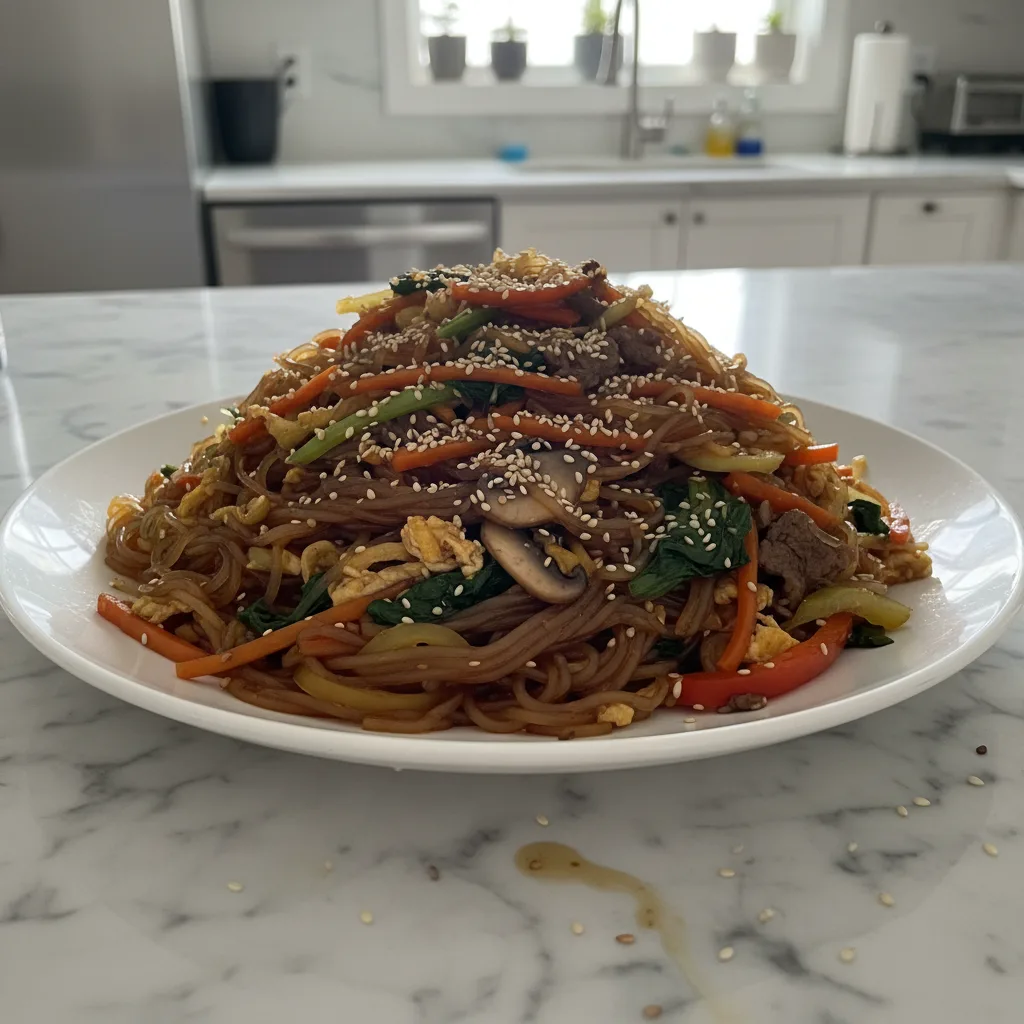
I still remember the first time I tasted Japchae. It was at a bustling Korean market, years ago, and honestly, I didn’t expect to fall head over heels for glass noodles. The aroma of sesame oil and stir-fried veggies just pulled me in. I tried to recreate it at home that very week, and oh boy, that first attempt was… memorable. Noodles sticking together, veggies soggy a bit of a disaster, to be real. But I kept at it, because that vibrant mix of chewy noodles and savory goodness? It’s pure comfort, a dish that feels like a warm hug after a long day. This Authentic Korean Japchae Noodles recipe is now a staple, perfected through many kitchen adventures.
One time, I was so excited to make this for a potluck, I accidentally used regular soy sauce instead of the light soy sauce. Oops! The noodles turned out a shade darker than usual, and a tad saltier, but everyone still raved about it. My friend, bless her heart, even said it had a “rustic charm.” That’s when I learned, even with a little kitchen chaos, Authentic Korean Japchae Noodles still manage to be delicious.

Ingredients for Authentic Korean Japchae Noodles
Noodle & Base Essentials
- Korean Sweet Potato Starch Noodles (Dangmyeon): These are the star, hon! Don’t even think about using anything else, their chewiness is what makes japchae, well, japchae. I always grab the widest ones I can find for that satisfying bite.
- Spinach (fresh): I love the vibrant green it adds, and it wilts down so nicely. I’ve tried frozen once, in a pinch, and it was… fine, but fresh is so much better for texture.
- Carrots (julienned): Adds a pop of color and a touch of sweetness. I swear, I always manage to cut one finger while julienning, but it’s worth it!
- Onion (sliced thinly): Brings a lovely aromatic base. Don’t skip this, it just melts into the dish creating a subtle sweetness.
Savory Flavor Boosters
- Mushrooms (shiitake or cremini, sliced): Earthy goodness! I usually rehydrate dried shiitake for a deeper flavor, but fresh cremini work wonderfully too if you’re in a rush. Don’t forget to squeeze out excess water from rehydrated ones!
- Bell Peppers (red & yellow, thinly sliced): For color and a sweet crunch. I once tried green bell peppers, and it wasn’t bad, but the red and yellow just look so much prettier and taste sweeter.
- Garlic (minced): You know me, the more garlic, the better! It’s the backbone of so many Korean dishes, and this is no exception.
Seasonings & Finishing Touches
- Soy Sauce (light/regular): The main seasoning. I usually go for a good quality Korean soy sauce, it really makes a difference. Don’t use dark soy sauce unless you want a much darker, richer color.
- Sesame Oil: Ah, the smell of sesame oil! It’s crucial for that authentic nutty aroma. I always add a generous drizzle at the end, it brings everything together.
- Sugar: Just a touch to balance the savory notes. I often use brown sugar for a slightly deeper caramel flavor, but white sugar works too.
- Black Pepper: Freshly ground, always. It adds a subtle warmth.
- Sesame Seeds (toasted): For garnish and a little extra nutty crunch. I always sprinkle these on right before serving, they just look so inviting.
Crafting Your Authentic Korean Japchae Noodles
- Prep the Veggies:
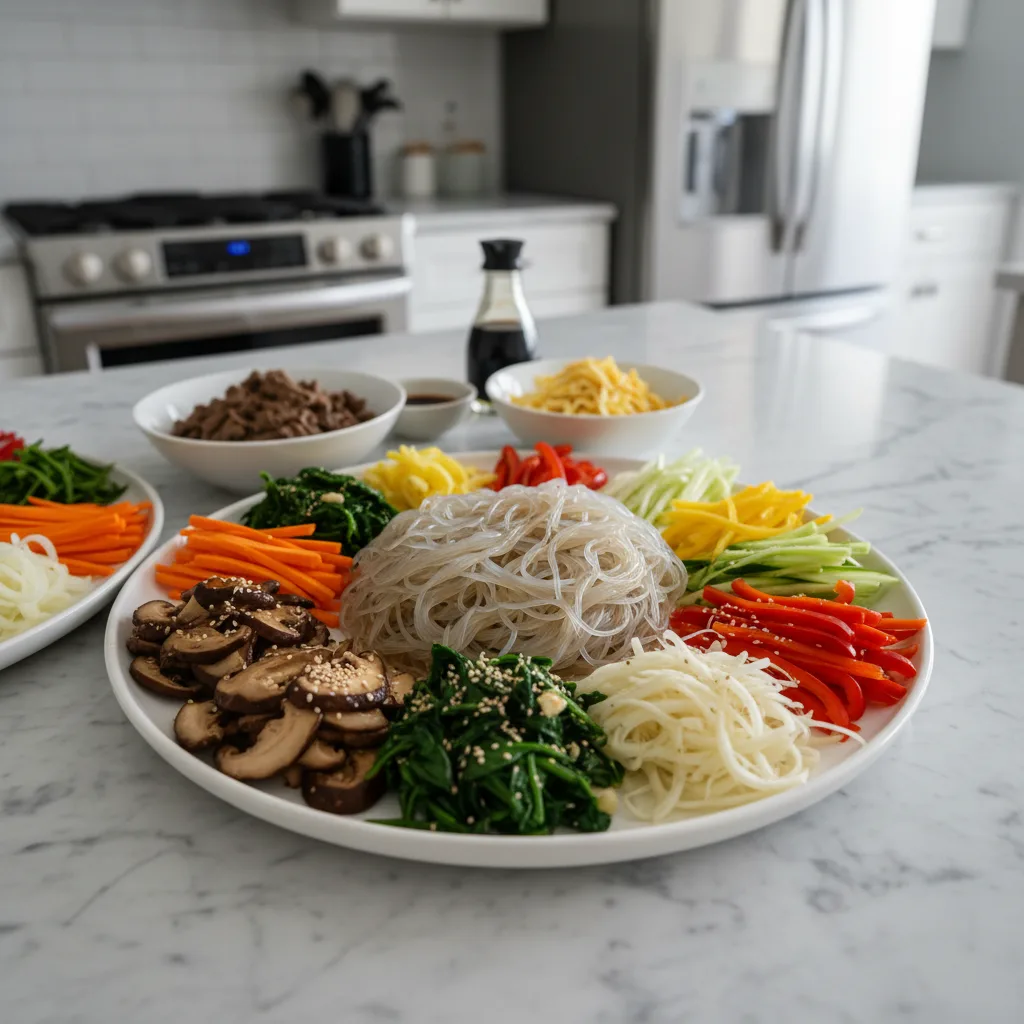
- First things first, get all your veggies ready. Slice those onions and bell peppers super thin, julienne the carrots (carefully, unlike me who always nicks a finger!), slice your mushrooms, and mince that garlic. This dish is all about the prep, or ‘mise en place’ as fancy chefs say. Honestly, if you don’t have everything ready, you’ll feel like you’re chasing your tail once the cooking starts. I usually put each type of veggie in its own little bowl makes me feel organized, even if the rest of my kitchen is chaos.
- Cook the Noodles:
- Bring a big pot of water to a rolling boil. Add your sweet potato glass noodles and cook them according to package directions, usually around 6-8 minutes, until they’re tender but still chewy. This is where I always remind myself not to overcook them, because mushy japchae noodles are just sad, trust me. Once they’re done, drain them immediately and rinse under cold water to stop the cooking and prevent sticking. Snip them with kitchen shears a few times makes them easier to eat later, a little trick I picked up from Mama.
- Sauté the Veggies (Separately!):
- Now, this is the step that some people skip, but don’t you dare! Sauté each vegetable separately in a little oil with a pinch of salt and pepper. Start with the tougher ones like carrots, then onions, bell peppers, and mushrooms. The spinach just needs a quick wilt. Cooking them separately ensures each veggie retains its distinct flavor and texture, and honestly, the colors just pop so much more. I know it feels like extra work, but it’s what makes Authentic Korean Japchae Noodles extra special.
- Whip Up the Sauce:
- In a small bowl, whisk together your soy sauce, sugar, minced garlic, and black pepper. Give it a taste you want that perfect balance of savory and a hint of sweet. This is your flavor base, so make sure it’s to your liking. I sometimes add a tiny splash of mirin here if I’m feeling fancy, but it’s totally optional. Don’t forget that sesame oil goes in right at the end, not in this initial mix!
- Combine Everything:
- In a very large bowl, combine your cooked noodles, all the sautéed vegetables, and the sauce. Now, this is the fun part, and it’s best done with your hands (clean ones, of course!). Gently toss and massage everything together, ensuring the sauce coats every single strand of noodle and every veggie. It smells absolutely divine at this stage that garlicky, sesame aroma is just intoxicating! Make sure you really get in there, you want that even distribution.
- The Finishing Touch:
- Once everything is beautifully mixed and glistening, drizzle in a generous amount of sesame oil. This is non-negotiable, it adds that signature nutty fragrance and shine. Sprinkle with toasted sesame seeds. Give it one last gentle toss. The final result should be vibrant, glossy, and smell incredible. I always sneak a little taste at this point, just to make sure it’s perfect. And it usually is, after all that love!
I remember one time, I was trying to rush through making this for a weeknight dinner, and I ended up dumping all the veggies into one pan. Big mistake! Everything steamed instead of sautéed, and the colors just weren’t as bright. Lesson learned: sometimes, a little extra patience makes all the difference. Now, I take my time, and it’s become almost meditative, watching each veggie transform. It’s a labor of love for these noodles.
Storage Tips for Authentic Korean Japchae Noodles
Okay, so you’ve made a big batch of Authentic Korean Japchae Noodles, which is smart because leftovers are fantastic! Store any cooled japchae in an airtight container in the fridge. It usually keeps well for about 3-4 days. Now, here’s a personal tip: when reheating, I avoid the microwave if I can. Microwaving can sometimes make the noodles a bit tough or dry. My preferred method is to gently warm it in a pan on the stovetop over medium-low heat with a tiny splash of water or broth and maybe a fresh drizzle of sesame oil. It helps rehydrate the noodles and keeps them soft and chewy. Don’t try to freeze it though, the noodles get weirdly brittle and the veggies lose their texture. Trust me, I tried that once and it was a nope. Eat it fresh or within a few days!
Ingredient Swaps for Japchae Noodles
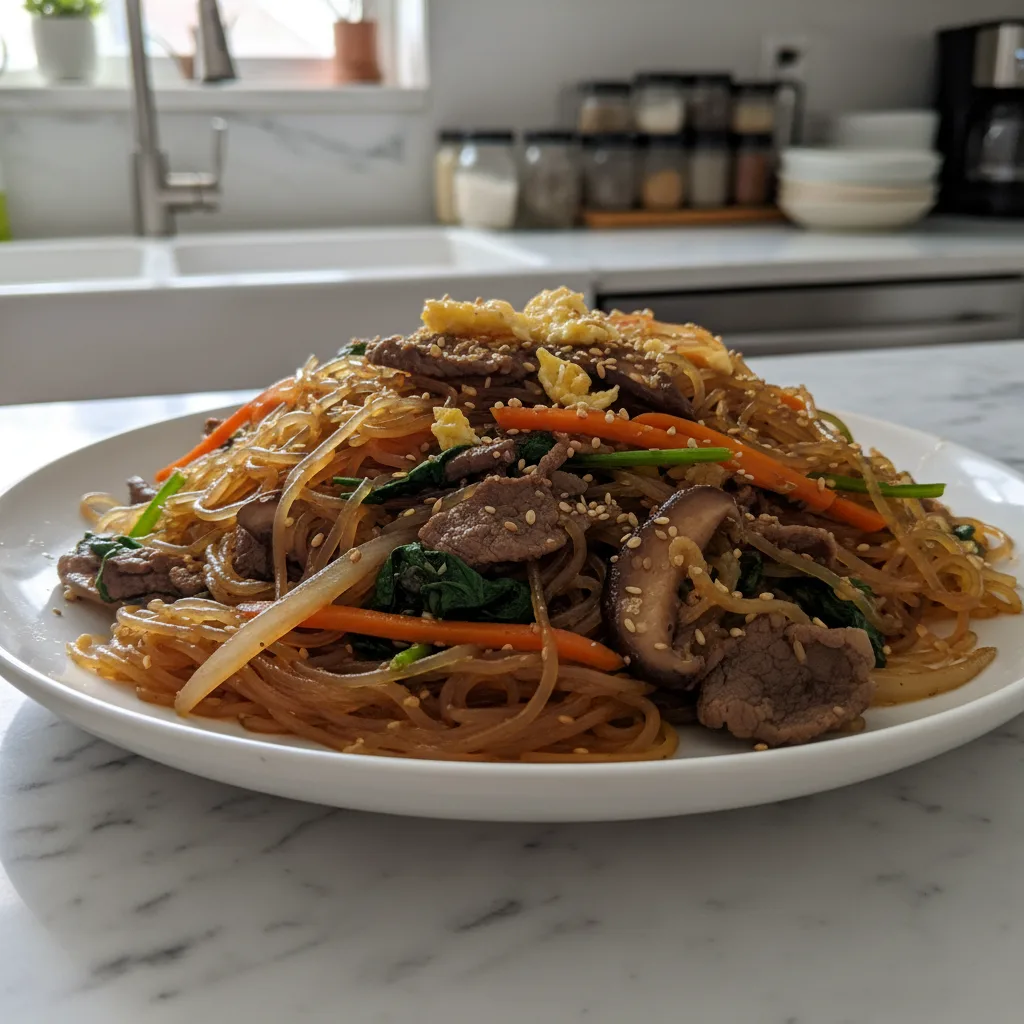
Life happens, and sometimes you don’t have every single ingredient for your Japchae. Don’t fret! For the bell peppers, any color works, though red and yellow are my go-to for sweetness. If you don’t have shiitake mushrooms, cremini or even white button mushrooms are perfectly fine, they’ll just give a slightly milder earthy flavor. Spinach can be swapped for other quick-cooking greens like bok choy or even kale (just massage the kale a bit first to tenderize it). I once used some leftover grilled chicken strips instead of just veggies, and it was a surprisingly delicious addition, though not traditional. Just remember to cook any protein separately and add it in at the end. The key is to keep those chewy glass noodles and that savory-sweet sauce!
Serving Your Japchae Noodles
These Japchae noodles are fantastic on their own, honestly, I could eat a whole bowl! But they also play really well with others. For a full Korean feast, I love serving them alongside some crispy Korean fried chicken or a simple bulgogi. A side of kimchi is almost mandatory, that tangy, spicy crunch is the perfect counterpoint to the savory noodles. If I’m keeping it simple, a fried egg on top with a runny yolk is just chef’s kiss. For drinks, a cold barley tea or even a crisp lager pairs wonderfully. And for dessert? Maybe some fresh fruit or a sweet rice cake. It’s a dish that brings people together, whether it’s a quiet dinner for two or a lively gathering with friends.
Cultural Backstory of Authentic Korean Japchae Noodles
Japchae, these vibrant Authentic Korean Japchae Noodles, actually have a pretty cool history! It originated in the 17th century during the Joseon Dynasty, and get this it didn’t even have noodles back then! It was a dish made primarily from stir-fried vegetables and mushrooms, presented to King Gwanghaegun who loved it so much he promoted the creator to a high-ranking position. The glass noodles, made from sweet potato starch, were only introduced later in the early 20th century, becoming the star ingredient we know and love today. For me, discovering this history made the dish even more special. It’s not just food, it’s a piece of Korean heritage, continuously evolving, just like our own family recipes that get tweaked and passed down. It reminds me of how food can tell a story.
Making Authentic Korean Japchae Noodles has become one of my favorite kitchen rituals. It’s a bit of a dance, prepping each component, but seeing those vibrant colors come together, smelling that incredible aroma… it’s just pure joy. Every time I make it, it brings back memories of that first market taste, and all the little kitchen adventures since. I hope it brings a bit of that warmth and deliciousness into your home too. Give it a try, and don’t be afraid of a little kitchen chaos!
Frequently Asked Questions
- → What are glass noodles made from?
They’re typically made from sweet potato starch, which gives them that amazing translucent look and wonderfully chewy texture. I once tried making japchae with rice vermicelli, and it just wasn’t the same, the texture really makes this dish!
- → Can I add meat to Authentic Korean Japchae Noodles?
Absolutely! While traditionally vegetarian, many versions include thinly sliced beef (bulgogi-style) or even chicken. Just make sure to marinate and cook it separately before tossing it in with the noodles and veggies. I’ve done it with leftover roast chicken, and it worked out pretty well!
- → Why do you cook the vegetables separately?
Honestly, it’s a game-changer! Cooking them separately ensures each veggie retains its unique texture and color, preventing them from becoming soggy or dull. It’s a bit more effort, but for truly vibrant Authentic Korean Japchae Noodles, it’s a step I never skip after making that steaming-all-together mistake.
- → Question about storage or leftovers?
Store cooled japchae in an airtight container in the fridge for 3-4 days. I avoid microwaving, gently reheat in a pan with a splash of water for best results. Don’t freeze it though, the noodles get weird! That was a mistake I made once.
- → What if I don’t have all the specific vegetables?
No worries, hon! This recipe is pretty forgiving. Use what you have on hand. Bell peppers, mushrooms, and spinach are fairly common, but feel free to experiment with zucchini, snap peas, or even thinly sliced cabbage. The key is variety in color and texture. I often use whatever looks good at the market!
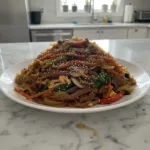
Homestyle Japchae: Authentic Korean Glass Noodles
- Prep Time: 30 Minutes
- Cook Time: 25 Minutes
- Total Time: 55 Minutes
- Yield: 4 Servings
- Category: Dinner Recipes
Description
Authentic Korean Japchae Noodles, a vibrant dish with chewy glass noodles and savory veggies. My kitchen’s favorite, simple to make!
Ingredients
- Noodle & Base Essentials:
- Korean Sweet Potato Starch Noodles (Dangmyeon)
- Spinach (fresh)
- Carrots (julienned)
- Onion (sliced thinly)
- Savory Flavor Boosters:
- Mushrooms (shiitake or cremini, sliced)
- Bell Peppers (red & yellow, thinly sliced)
- Garlic (minced)
- Seasonings & Finishing Touches:
- Soy Sauce (light/regular)
- Sesame Oil
- Sugar
- Black Pepper
- Sesame Seeds (toasted)
Instructions
- Prep the Veggies:: First things first, get all your veggies ready. Slice those onions and bell peppers super thin, julienne the carrots (carefully, unlike me who always nicks a finger!), slice your mushrooms, and mince that garlic. This dish is all about the prep, or ‘mise en place’ as fancy chefs say. Honestly, if you don’t have everything ready, you’ll feel like you’re chasing your tail once the cooking starts. I usually put each type of veggie in its own little bowl – makes me feel organized, even if the rest of my kitchen is chaos.
- Cook the Noodles:: Bring a big pot of water to a rolling boil. Add your sweet potato glass noodles and cook them according to package directions, usually around 6-8 minutes, until they’re tender but still chewy. This is where I always remind myself not to overcook them, because mushy japchae noodles are just sad, trust me. Once they’re done, drain them immediately and rinse under cold water to stop the cooking and prevent sticking. Snip them with kitchen shears a few times – makes them easier to eat later, a little trick I picked up from Mama.
- Sauté the Veggies (Separately!):: Now, this is the step that some people skip, but don’t you dare! Sauté each vegetable separately in a little oil with a pinch of salt and pepper. Start with the tougher ones like carrots, then onions, bell peppers, and mushrooms. The spinach just needs a quick wilt. Cooking them separately ensures each veggie retains its distinct flavor and texture, and honestly, the colors just pop so much more. I know it feels like extra work, but it’s what makes Authentic Korean Japchae Noodles extra special.
- Whip Up the Sauce:: In a small bowl, whisk together your soy sauce, sugar, minced garlic, and black pepper. Give it a taste – you want that perfect balance of savory and a hint of sweet. This is your flavor base, so make sure it’s to your liking. I sometimes add a tiny splash of mirin here if I’m feeling fancy, but it’s totally optional. Don’t forget that sesame oil goes in right at the end, not in this initial mix!
- Combine Everything:: In a very large bowl, combine your cooked noodles, all the sautéed vegetables, and the sauce. Now, this is the fun part, and it’s best done with your hands (clean ones, of course!). Gently toss and massage everything together, ensuring the sauce coats every single strand of noodle and every veggie. It smells absolutely divine at this stage – that garlicky, sesame aroma is just intoxicating! Make sure you really get in there; you want that even distribution.
- The Finishing Touch:: Once everything is beautifully mixed and glistening, drizzle in a generous amount of sesame oil. This is non-negotiable, it adds that signature nutty fragrance and shine. Sprinkle with toasted sesame seeds. Give it one last gentle toss. The final result should be vibrant, glossy, and smell incredible. I always sneak a little taste at this point, just to make sure it’s perfect. And it usually is, after all that love!